The 4 Levels of Bookkeeping Team Structure | Build Scalable Team Leverage
Most Bookkeeping Firms Don’t Have a Staffing Problem.
They Have a Role Clarity Problem.
One of the biggest operational mistakes I see inside bookkeeping firms is hiring without clearly understanding what each role is actually supposed to create inside the business.
Not just:
what tasks they do
what software they use
or how many years experience they have
But operationally:
what level of ownership should they hold?
how much support should they require?
what level of revenue responsibility should they manage?
what type of leverage should this role create for the business?
Because different roles create different types of leverage.
And until that becomes clear, firms often end up:
hiring emotionally
overloading seniors
expecting juniors to operate independently too early
blaming teams for structural problems
and wondering why growth feels heavier instead of easier
Most Firms Hire Level 1–2 Staff…
Then Expect Level 3–4 Performance
This is one of the biggest hidden operational problems in bookkeeping firms.
A junior bookkeeper should not be expected to:
operate independently
manage difficult client communication
solve complex workflow problems
carry operational pressure
or reduce founder dependency immediately
That is not what the role exists to do.
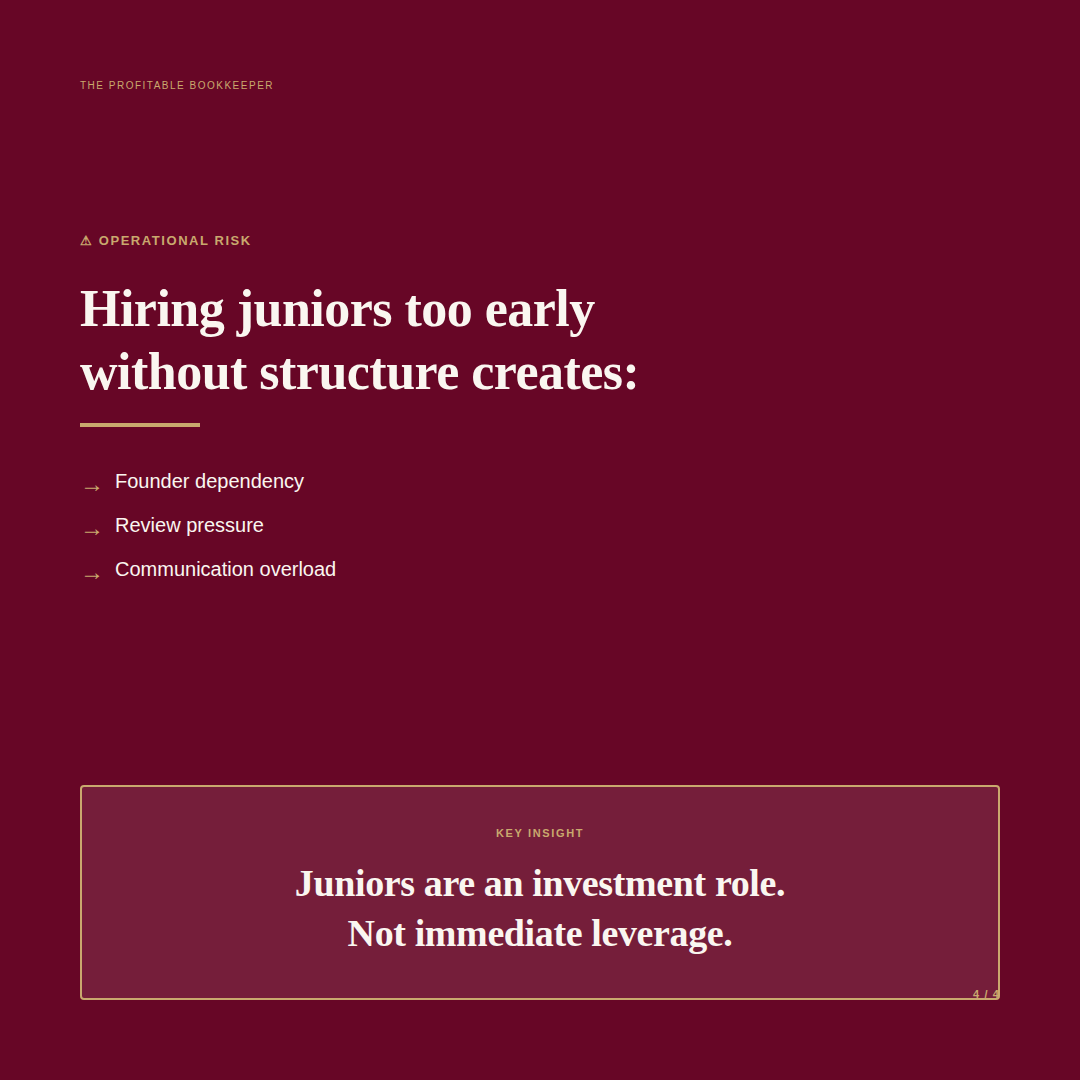
A junior role is an investment role.
It requires:
structure
workflows
review systems
support
operational visibility
escalation pathways
Without those things, juniors do not create leverage.
They create more communication load.
Then the owner concludes:
“Delegation doesn’t work.”
But delegation usually isn’t failing because of capability.
It’s failing because the operational support structure doesn’t exist yet.
A Bookkeeper Creates Delivery Leverage
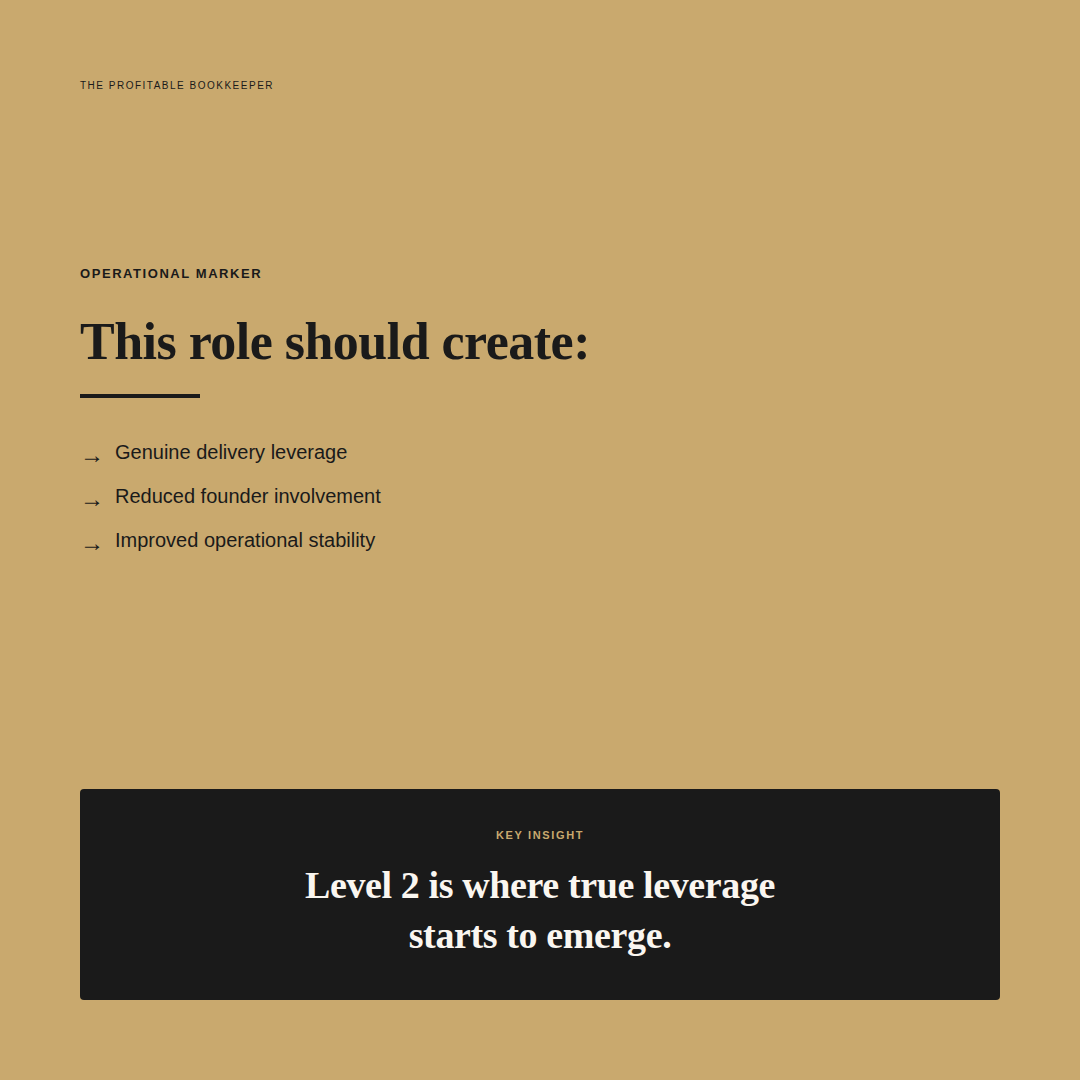
This is the stage where true operational leverage should begin emerging.
A solid bookkeeper should be capable of:
managing standard client workflows
owning recurring delivery
communicating proactively
handling deadlines independently
reducing founder involvement operationally
But they still require:
occasional escalation support
review guidance
leadership visibility
operational structure around them
This is why workflow maturity matters so much.
Because businesses do not scale through people alone.
They scale through:
structure
visibility
systems
workflow consistency
operational clarity
A True Senior Creates More Than Output
This is where many firms misunderstand the role completely.
A senior should not simply:
“do more bookkeeping”
work longer hours
absorb operational chaos
rescue workflows constantly
A true senior creates:
operational stability
leadership leverage
workflow consistency
reduced founder dependency
team support
delivery confidence
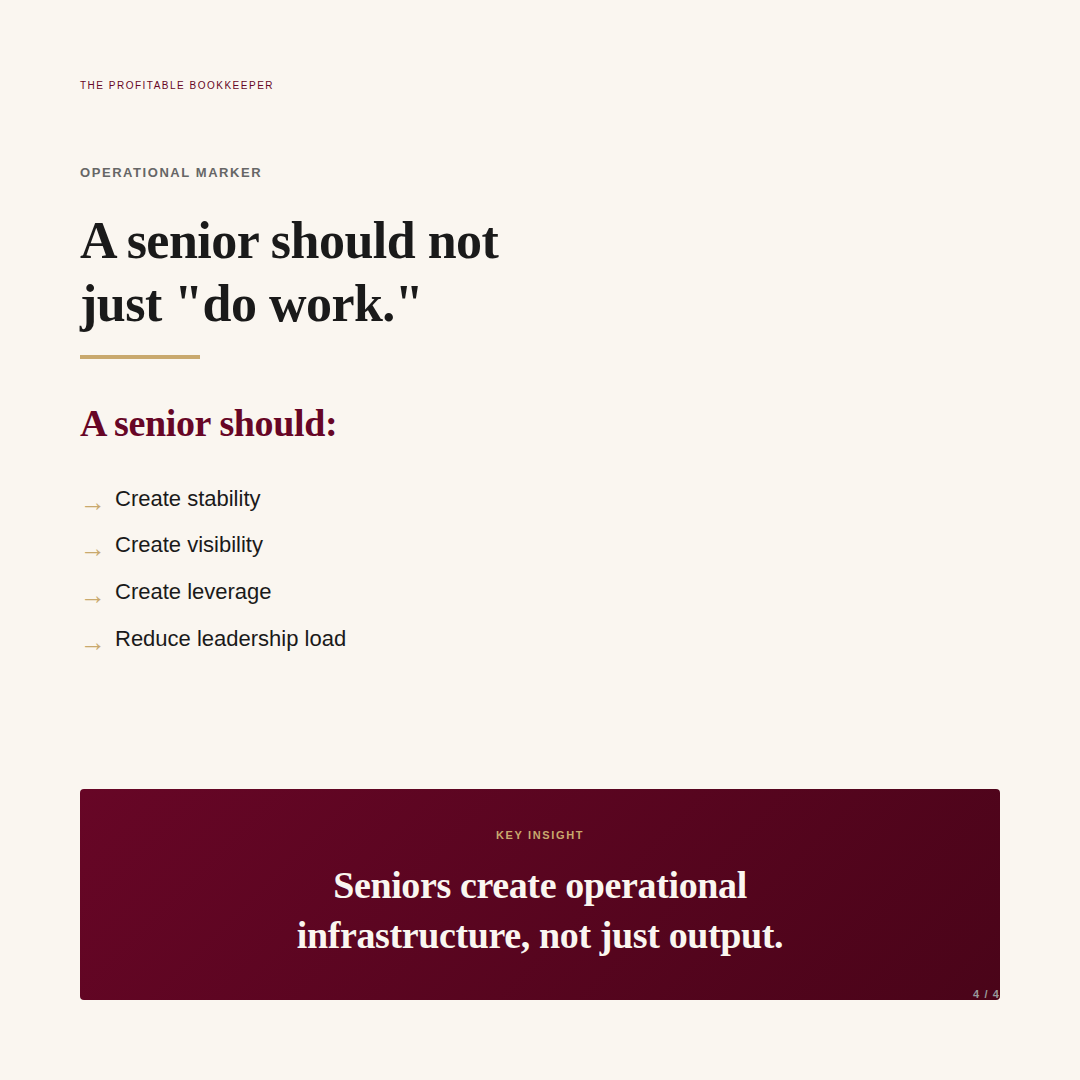
A senior should reduce pressure inside the business.
Not silently absorb it.
And this is where leadership maturity becomes critical.
Because one of the biggest mistakes firms make is continually moving the goalposts for high performers.
The Leadership Lesson I’ll Never Forget
I worked in a firm where the expectation for a senior bookkeeper was around $15K a month in billables.
During peak periods, leave coverage, and gaps between hires… I stepped up.
Some months I did:
$20K
then $25K
then even $30K
But those months were never sustainable operational capacity.
They were temporary peak-pressure periods where I was carrying additional operational load to support the business.
Over time though, those peak months quietly became the new baseline expectation.
And that completely changed how I think about leadership.
Because there is a huge difference between:
someone stepping up temporarily
and:
building a business model around permanent maximum capacity
That is where burnout starts.
Not because people are incapable.
But because temporary overperformance becomes operationally normalised.
Yes, I received recognition.
Yes, I won MVP awards.
But at the same time, I had unintentionally created a new minimum expectation that was never sustainable long term.
Sustainable Performance Scales Better Than Burnout
One of the most important shifts for CEOs is understanding this:
High performance should not become permission to continually extract more from good people.
Because eventually:
great staff stop feeling valued
and start feeling used
And if your business only works when your best people constantly operate at maximum capacity…
the issue may not actually be the team.
The issue may be:
pricing
workflow inefficiency
operational structure
delivery profitability
unsupported delegation
unrealistic operational expectations
This is where many firms accidentally try solving operational problems through staff pressure.
But pressure is not scalability.
Structure is.
Clear Expectations Create Healthy Teams
Operationally mature firms understand:
what each role is responsible for
what support each role requires
what sustainable performance looks like
what healthy profitability looks like
and what level of leverage each role should create
That clarity changes everything.
Because healthy businesses are not built by continually raising expectations every time someone performs well.
They are built through:
operational maturity
realistic role expectations
sustainable profitability
workflow structure
supported teams
leadership visibility
The goal is not to squeeze maximum output from people.
The goal is to build operationally healthy businesses where:
expectations are clear
quality is protected
profitability is sustainable
and great staff actually want to stay
Because sustainable performance scales.
Burnout doesn’t.

